Monday, February 28, 2011

Friday 25th February

Infecting the city

Post an entry on your blog responding to your 'Infecting The City' experience. Were you infected? If you were invited to participate as an artist what would you come up with? As a Jeweller/participant how could you contribute? etc


Please post a comment with your name and blog

Friday, February 18, 2011

Gestalt Theory

Reviewing Gestalt Theory, Learners share their research.

Thursday, February 17, 2011

Reminder

Next week ( Friday 25th ) we are attending 'Infecting The City', for our lesson. Please meet outside the main entrance to Cape Town Station (Adderly St side), 8:30 (please be punctual)


Also by next week, link your blogs to this one, post your gestalt project and answer the following (use images if appropriate):


As a Designer, why is it important to be aware of the gestalt principles?

Wednesday, February 16, 2011

Design Indaba

http://www.designindaba.com/expo

Infecting The City

Feast your eyes on Cape Town’s fine art treasures

When:

Mon 21 – Sat 26 from 07h00 – 18h00

Where:

The glass wall cabinets at the Festival Hub
Cape Town has many wonderful art galleries that show the works of our talented photographers, sculptors, painters and printmakers. Infecting The City recognises that only a tiny percentage of our population visits these treasure houses where artists display their varied visions of the world.
The Festival has invited six local galleries to show their artists’ work to the general public. The Festival hopes this will encourage those who never enter art galleries to venture inside in future: everybody is welcome!
The Satellite Galleries are housed in two rows of wall cabinets at the Festival Hub. Two different galleries will be featured every two days.

Greatmore Studios

‘Art is a truly cultural treasure, changing with us as a society and offering us all a window to look to the future for inspiration or examine our past and present in detail for fresh perspectives,’ says Kate Tarrat Cross, director of Greatmore Studios.
Greatmore is a creative hub that prides itself on encouraging its artists-in-residence to participate in community outreach programmes, aiming to provide a greater understanding of the meaning and practice of art in those communities. ‘It’s with great solidarity that we support Infecting The City in its drive to bring art to street level,’ says Kate.
For the Festival the Studios will be showcasing a diverse, multifaceted selection of works from its expressive stable of local and visiting artists.
When: Monday and Tuesday

Michael Stevenson

Since its inception in 1990, the Michael Stevenson Gallery has gained a deserved reputation as one of South Africa’s leading contemporary galleries, having notched up the talents of artists as diverse as Zander Blom, Meshac Gaba, Nicholas Hlobo, Anton Kannemeyer and Zanele Muholi. Staying true to its innovative vision, the gallery has commissioned the MADEYOULOOK collective (made up of Molemo Moiloa and Nare Mokgotho) to produce work specifically for the Festival.
Says the gallery’s Joost Bosland, ‘It’s very exciting that MADEYOULOOK will be participating in this event, especially since their work challenges the existing boundaries between art spaces and public spaces.’
When: Monday and Tuesday

Heidi Erdmann

Although this gallery was launched (in 1999) with the aim of promoting contemporary comic art, it now represents sculptors, painters and printmakers. Says owner Heidi Erdmann of the gallery’s participation in the Festival, ‘I was very keen from the outset because it’s important to take artworks outside the comfort of the white cube.’
For the Festival she’s selected “three very different artists working in a wide range of media: sculptor Brendhan Dickerson, conceptualist Barbara Wildenboer and comic artist Karlien de Villiers.
When: Wednesday and Thursday

Joao Ferreira

Established in 1998, the Joao Ferreira Gallery has, from the offset, established itself as one of South Africa’s foremost contemporary art galleries and fine-art dealerships.
The Gallery aims to cultivate critical appreciation and stimulate discussion around visual art by regularly hosting new shows of work by contemporary artists. It showcases the works of diverse and experimental artists such as Araminta de Clermont, Egon Tania, Mark Hipper, Michael Taylor and Sanell Aggenbach.
When: Wednesday and Thursday

iArt

iArt Gallery, which displays works by some of South Africa’s most prominent contemporary artists alongside works by promising young talent, has always aimed to ‘maintain the highest possible artistic standards’. Director Johan du Plessis believes that public art events are more than just an opportunity to showcase a particular gallery’s artists; they’re a necessity. ‘Every person should, even from a very young age, be exposed to art; especially good art,’ he says. ‘We’re grabbing this opportunity with both hands and are hoping to expose the public at large – especially young people – to good art. This will hopefully lead to getting more people into galleries, which are often seen as somewhat elitist.’
For the Festival it will be exhibiting the works of six well-known young artists: Zwelethu Mthethwa, Matthew Hindley, Carla Leisching, John Walters, Beth Armstrong and Alex Emsley.
When: Friday and Saturday

WhatiftheWorld

Whatiftheworld proudly punts itself as ‘a destination point for curators and collectors to experience innovative work and become acquainted with some new names’. Included among these names are artists such as Avant Car Guard, Cameron Platter, Athi-Patra Ruga, Stuart Bird and Peter Eastman. No surprise, then, that in 2007 it was selected by London’s Contemporary magazine as one of the Top 50 Emerging Galleries from Around the World. Expect to see fresh and highly innovative art.
When: Friday and Saturday
Homework

Homework:
  • Construct a blog. Please include a face pic so that I can get to recognise you!
  • link the blog to this one 
  • find images which correspond to the gestalt principles. At least 2 for each principle, 1 from any area of design and 1 specifically from Jewellery design
  • include some writing indicating how the principle is being employed
  • due 18th February

Monday, February 14, 2011

Guide-line for Marking

A (80+): Highly Competent; has met all criteria through.
  • Excellent research, understanding and delivery. Exciting, unexpected use of examples, images, information and presentation. Highly engaging.


B (70-79): Competent; has met the essential criteria through.
  • Sound understanding. Information well researched, integrated and communicated with ease. Interesting and engaging presentation.


C (60-69): Becoming Competent; has engaged with the criteria.
  • Displaying a basic understanding which needs more integration and development. Requirements of task are covered. Sufficient effort applied.


D (50-59): Adequate
  • Basic elements of task covered. Little integration and understanding of the criteria, but can just proceed to the next task need. More effort required.


E (40-49): Fail; basic criteria not addressed.
  • Fundamental aspects missing. Inadequate research, poor use of material. Cannot proceed to the next task.


F (30-39): Fail
  • Misunderstanding task. Insufficient research and effort. The majority of the criteria not addressed.


G (0-29): Fail
  • Fundamental error. Extremely poor effort. No criteria addressed.

Friday, February 11, 2011

Realising Gestalt

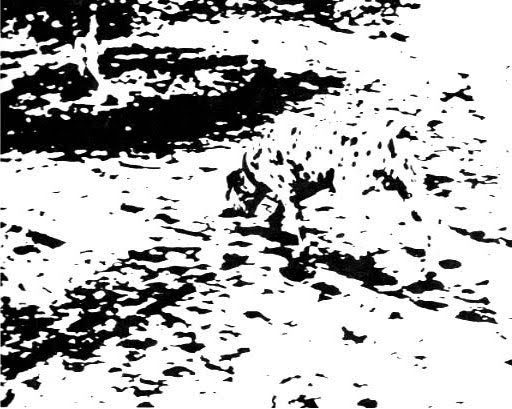
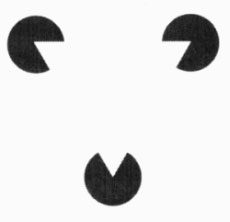
I learned today, whilst teaching the gestalt theory,... well... I realised ....that humans are naturally wired to ...group things...put things in 'order'; images, ideas, concepts, forms, shapes, lines, dots,....to form a unified whole. This is how we make sense of things (?)(!) This is how we make pictures, how we make up stories. It's how we make meaning. A part of me calls this... being deceitful, being a liar, being dishonest.
The drive for this 'making-sense-phenonema' (gestalting) (!) is probably a mechanism for basic survival. The pathology of this is, perhaps, neurotic self-obsessed preservation/defensiveness!! Creativity lies somewhere in between and without this faculty I wouldn't be able to write nor read this!!

Thursday, February 10, 2011

Gestalt Theory

Introduction to Gestalt Principles:

Homework:
  • Construct a blog. Please include a face pic so that I can get to recognise you!
  • link the blog to this one 
  • find images which correspond to the gestalt principles. At least 2 for each principle, 1 from any area of design and 1 specifically from Jewellery design
  • include some writing indicating how the principle is being employed
  • due 18th February

Monday, February 7, 2011

Friday 4th February 2011


Introduction to course
Discussion in small groups:
  • What is Design?
  • Why do we research?
  • What is the Design Process?

Course Outline

Design Theory One

Defining design (what, why, where, how, when?)
Defining research (what, why, where, how?)
Defining design process

Establishing an understanding and competent use of:
  • Design elements:
    • Colour, shape, form, space/depth, tone, texture, line
  • Design principles:
    • Balance, weight, symmetry, contrast, proportion, rhythm
    • Gestalt principles

Design history:
  • Looking at Design through the ages and identifying
    • Major styles/movements
    • Iconic  Designer
    • Identifying various design approaches and philosophies

Research Project:
  • Earring findings
Classes take the form of group and individual presentations and dialogues.
Learners develop their own blogs which become the format to present research projects and class-presentations.


Historical Movements/Styles

  • Ancient Egypt
  • Greek
  • Roman
  • Byzantine
  • Middle Ages
  • Renaissance
  • Baroque
  • Mannerism
  • Rococo
  • Neo-Classism
    • Romanticism
    • Realism
  • Arts and Crafts movement
  • Art Nouveau
    • Impressionism
    • Post-impressionism
    • Fauvism
    • Surrealism
    • Dada
    • Cubism
    • Expressionism
  • Art Deco
  • De Stijl
  • Bauhaus
  • Moderism
  • Late Moderism
    • Minimalism
    • Abstract Expressionism
  • Post Modernism
    • Pop Art
    • Deconstruction

Template for Historical Research Projects

  • Priciple/Philosophy of Style/Movement (what)
  • Historical Context (when)
  • Geographical/Cultural context (where)
  • Social/Political context (why)
  • Influences (why)
  • Innovation/contribution (what)
  • Characteristics/style (how/what)
  • Iconic Designer (who)
  • How is this relevant to us now?

Template for Technical research Projects


  • Principle of Technique or style (definition)
  • History: Cultural and social contexts
  • Types/styles
  • Explanation of technique
  • Most appropriate uses
  • What can go wrong (handy tips)
  • What is most often over-looked
  • Variations


Art/Design Timeline